
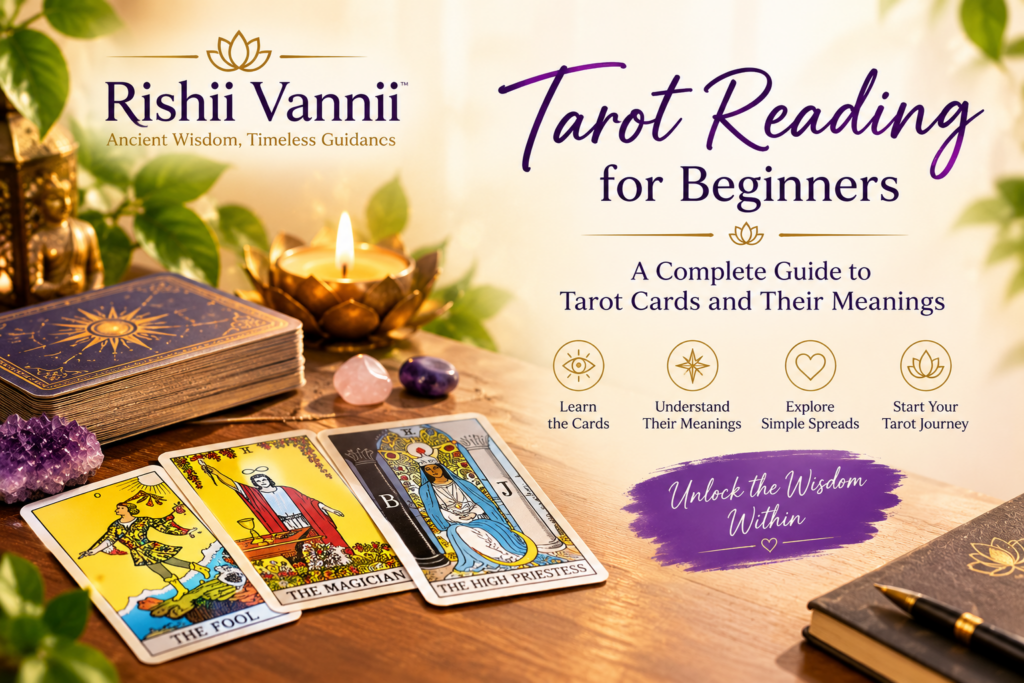
Tarot Reading for Beginners: A Complete Guide to Tarot Cards and Their Meanings
Are you curious about Tarot cards and how Tarot reading works? Tarot is a fascinating spiritual practice that uses symbolic imagery to encourage reflection, explore different perspectives, and develop a deeper understanding of life’s experiences. Whether you want to learn Tarot for personal growth or develop your skills as a Tarot reader, understanding the basics is the perfect place to begin.
At Rishii Vannii, we believe spiritual learning should be accessible, meaningful, and easy to understand. In this guide, discover Tarot reading, card meanings, simple spreads, and practical tips for beginners.
What Is Tarot Reading?
Tarot reading is a practice in which a reader interprets cards using traditional meanings, symbolism, imagery, and the context of a question. People explore Tarot to reflect on relationships, career choices, personal development, and everyday challenges.
A Tarot reading is not a guaranteed prediction of the future. Instead, it can offer a framework for self-reflection, help people consider different possibilities, and encourage thoughtful decision-making.
For beginners, learning Tarot involves understanding the cards, practising interpretations, and developing a balanced approach to spiritual guidance.
Understanding the 78 Tarot Cards
A traditional Tarot deck contains 78 cards divided into two groups: the Major Arcana and the Minor Arcana.
1. Major Arcana: Important Life Themes
The Major Arcana consists of 22 cards, beginning with The Fool and ending with The World. These cards are often associated with significant life themes, personal growth, transitions, and important lessons.
Some well-known Major Arcana cards include:
- The Fool: New beginnings, curiosity, and taking a step into the unknown.
- The Magician: Initiative, creativity, and using available resources.
- The High Priestess: Intuition, inner reflection, and hidden knowledge.
- The Lovers: Relationships, values, and meaningful choices.
- The Star: Hope, inspiration, and renewal.
- The World: Completion, achievement, and fulfilment.
Card interpretations can vary depending on the question, surrounding cards, and the reader’s chosen tradition.
2. Minor Arcana: Everyday Experiences
The Minor Arcana contains 56 cards divided into four suits.
Wands: Associated with creativity, ambition, passion, and action, these cards often relate to projects, motivation, and new ideas.
Cups: Connected with emotions, relationships, intuition, and personal connections, they can help frame questions about feelings and emotional experiences.
Swords: Associated with thoughts, communication, decisions, and challenges, these cards encourage careful consideration of beliefs and choices.
Pentacles: Linked with work, finances, resources, and material stability, they can help people reflect on practical goals and responsibilities.
Understanding these suits gives beginners a foundation for interpreting Tarot cards.
How to Start Learning Tarot Reading
Learning Tarot does not require memorising all 78 cards immediately. A consistent approach can make the process easier.
Step 1: Choose a Tarot Deck
The Rider-Waite-Smith Tarot deck is a popular starting point because its illustrated cards offer visual details that beginners can study. Choose a deck whose artwork you find engaging and easy to understand.
Step 2: Learn the Card Meanings
Start with a few cards each day. Study their traditional meanings, observe the imagery, and record your understanding in a Tarot journal. Gradually connect each card’s symbolism with the question being explored.
Step 3: Practise a One-Card Reading
Draw one card and reflect on its imagery and traditional meaning. Consider what themes the card suggests and what questions it raises about your situation.
This simple exercise helps you become familiar with the deck without feeling overwhelmed.
Step 4: Explore Three-Card Tarot Spreads
A three-card spread is a useful exercise for beginners. You could use positions such as:
- Situation, challenge, and possible approach.
- Past influences, present circumstances, and possible direction.
- Thoughts, feelings, and actions.
These are flexible interpretive frameworks rather than fixed rules. Choose positions that suit your question and explain your interpretation clearly.
Step 5: Practise Ethical Tarot Reading
A responsible Tarot reader respects privacy, avoids creating fear, and does not present interpretations as unquestionable facts. Tarot should not replace professional medical, legal, or financial advice.
Ethical practice creates a more supportive and respectful experience for everyone involved.
What Are the Benefits of Learning Tarot?
People explore Tarot for different reasons. Some enjoy its symbolism, while others use it as a structured method of reflection.
Learning Tarot may help you:
- Understand traditional card symbolism.
- Practise observation and interpretation.
- Explore personal questions from different perspectives.
- Build confidence through regular study.
- Develop an interest in spiritual traditions and self-discovery.
The experience varies from person to person. Tarot should be approached as a reflective practice rather than a scientifically established method of predicting future events.
Can You Learn Tarot Online?
Yes. Online Tarot classes offer a convenient way to learn at your own pace. A structured Tarot course may cover the Major and Minor Arcana, individual card meanings, Tarot spreads, interpretation techniques, and guided practice.
When choosing an online Tarot course, look for clear explanations, a structured syllabus, opportunities to practise, and guidance on ethical reading.
At Rishii Vannii, our Tarot teaching approach focuses on making spiritual knowledge easier to explore. Whether you are beginning with your first Tarot deck or strengthening your interpretation skills, step-by-step learning can help you build a solid foundation.
Tarot Reading for Personal Guidance
Many people explore Tarot when they want to reflect on a situation, clarify priorities, or consider different ways forward. A thoughtful reading focuses on the question, card symbolism, and practical insights that a person may take away.
The aim is not to make decisions on someone else’s behalf but to encourage awareness and independent thinking.
If you are interested in a personal Tarot consultation, choose a reader who communicates clearly, respects your boundaries, and explains interpretations without making unrealistic promises.
Begin Your Tarot Journey with Rishii Vannii
Tarot reading combines traditional symbolism, thoughtful interpretation, and personal reflection. By learning the 78 Tarot cards, exploring simple spreads, and practising consistently, beginners can gradually develop their understanding of this fascinating subject.
At Rishii Vannii, we bring together ancient wisdom and modern spiritual learning to make Tarot accessible to people at different stages of their journey.
Whether you are interested in a personal Tarot reading or wish to learn Tarot from beginner to advanced level, take the first step towards exploring this meaningful practice.
Explore Tarot Reading and Tarot Teaching Classes with Rishii Vannii — Ancient Wisdom, Timeless Guidance.